Xander Foster · 17 October 2026
Velano's Bell-Casting Traditions Shape Regional Soundscapes Today
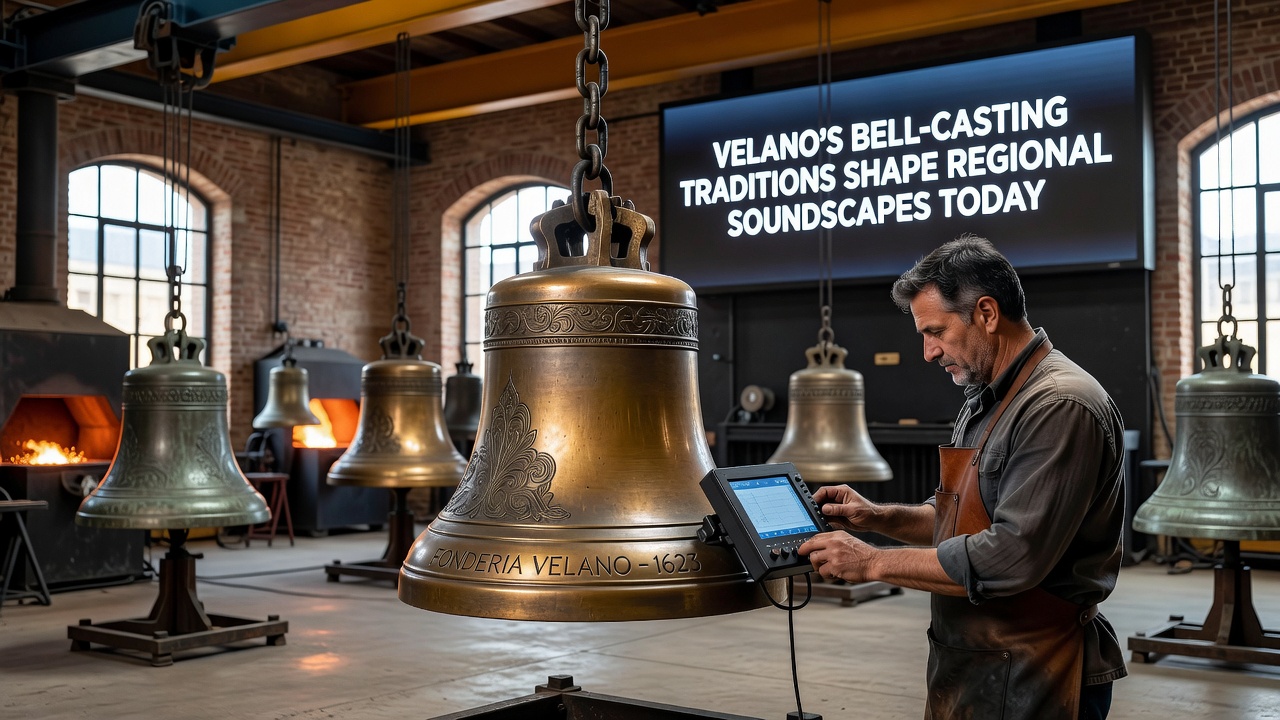
Velano's bell-casting practices trace back centuries and continue to influence the acoustic environment across the surrounding valleys and towns, where the resonance of newly forged bells integrates with daily routines and seasonal events alike. Artisans maintain methods that combine historical techniques with contemporary foundry standards, producing instruments whose tones carry distinctive harmonic qualities shaped by specific alloy compositions and casting processes developed in the region. Local records document the first documented bell foundries operating in Velano during the late medieval period, and those same sites still host active workshops that supply churches, civic towers, and public installations throughout the area.
Historical Development of Casting Methods
Founders in Velano refined clay-mold construction and lost-wax techniques over generations, allowing precise control over bell wall thickness and interior profiles that determine pitch and sustain. Metallurgical analyses conducted by regional heritage laboratories show consistent use of copper-tin alloys with trace elements that enhance durability while preserving tonal clarity, and these formulations remain largely unchanged since the 18th century. Workshops preserve pattern books and tuning records that detail how each bell's harmonic series was calibrated to complement neighboring instruments, creating layered sound fields when multiple bells ring in sequence.
During the 19th century, foundries adapted steam-powered machinery for lifting and pouring while retaining hand-finishing steps for the strike points and crowns. This hybrid approach persists today, and observers note that the resulting bells produce overtones that blend more readily with ambient rural and urban noises than mass-produced alternatives from larger industrial centers.
Acoustic Integration in Contemporary Landscapes
Soundscape measurements taken at fixed monitoring stations around Velano demonstrate that bell tones contribute measurable low-frequency energy that propagates across agricultural fields and into residential zones, especially during morning and evening peals. Researchers from the University of Padua have mapped these patterns and found that the bells' decay times interact with local topography to create reverberant zones that extend up to three kilometers from the source towers under typical wind conditions. Residents report that these recurring sonic markers help orient daily activities, from agricultural timing to community gatherings, without requiring visual cues.
October 2026 will feature expanded public demonstrations at three active foundries, where visitors can observe full casting cycles and hear test rings of newly completed bells before installation. These events coincide with regional heritage documentation projects that record the acoustic signatures of each instrument for archival comparison with earlier recordings.
Preservation Efforts and Technical Continuity
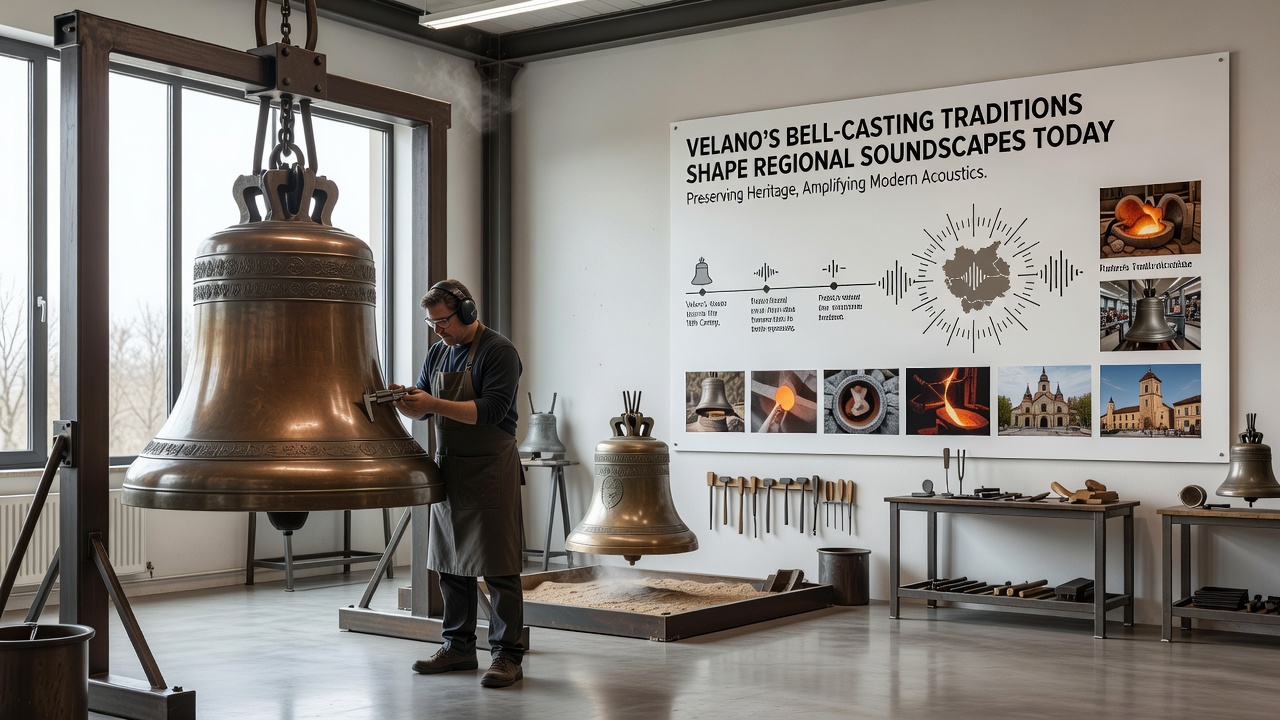
Apprenticeship programs operated by the Velano Bell Founders Guild maintain enrollment figures that have remained stable over the past decade, with participants learning both traditional mold preparation and digital modeling software used for preliminary design verification. Training includes acoustic testing protocols that compare prototype bells against historical reference tones stored in municipal archives. Data collected through these programs indicate that modern bells cast under guild supervision retain the same fundamental frequencies and decay envelopes as instruments documented in 17th-century ledgers.
Local planning regulations now require acoustic impact assessments for new tower installations, and these reviews incorporate historical bell spectra to ensure compatibility with existing sound environments. One case involved the 2024 replacement of a damaged civic bell, where the new casting was tuned to match the spectral profile of its predecessor after analysis by conservation specialists.
Broader Regional Influence
Bells produced in Velano reach installations across northern Italy and parts of Switzerland, where their characteristic brightness and even harmonic distribution have been noted in acoustic surveys conducted by the Swiss Federal Institute of Technology. Export records show steady demand for replacement instruments in historic structures, and the consistent quality of Velano castings supports ongoing restoration projects that aim to preserve original sonic character rather than introduce modern substitutions.
Community ensembles that perform on tuned bell sets draw from this same tradition, and their repertoire includes pieces composed specifically to exploit the interaction between multiple bells and the natural resonance of stone and timber architecture common in the region. Recordings made during these performances provide baseline data for studies examining how anthropogenic sounds merge with natural soundscapes over time.
Conclusion
Velano's bell-casting traditions continue to define measurable aspects of the regional sound environment through sustained technical practice, documented acoustic properties, and integration into both daily routines and scheduled cultural events. Ongoing monitoring, training programs, and regulatory frameworks support the persistence of these sonic characteristics into future decades.