Freya Lorenz · 31 October 2026
Velano's Clock Tower Mechanisms Reveal Medieval Engineering Secrets
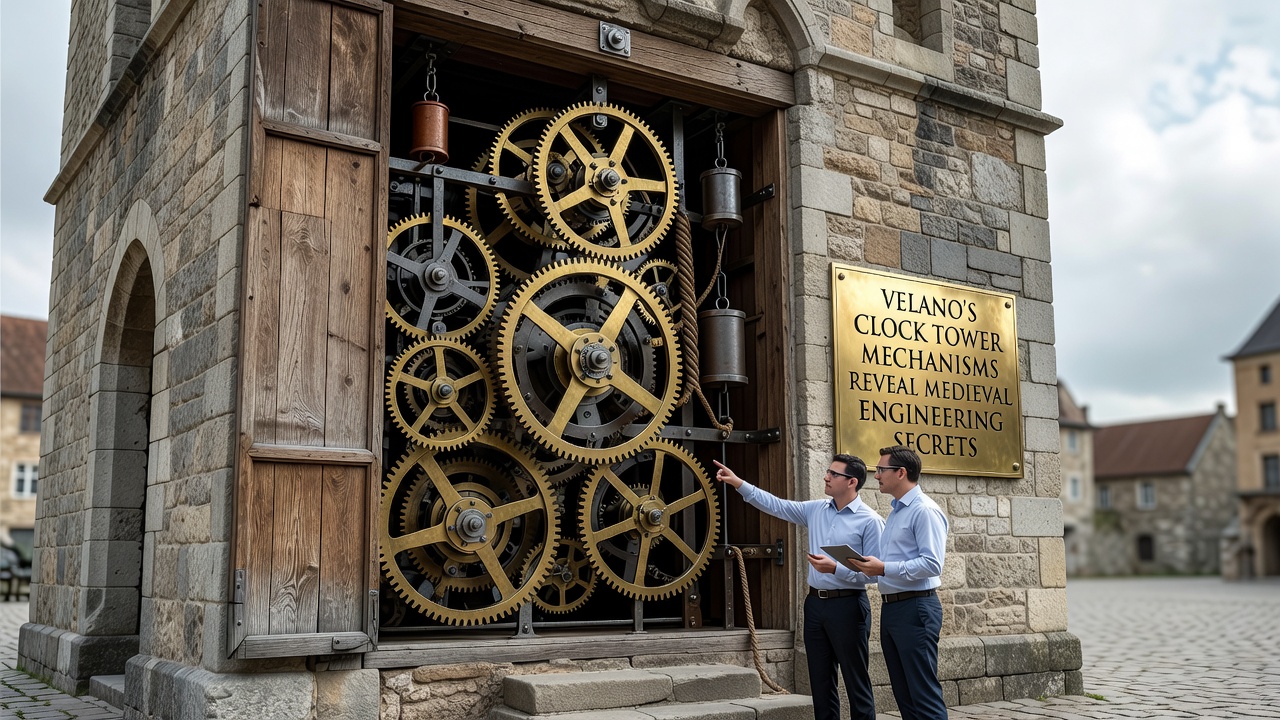
Velano's clock tower stands as one of the few surviving examples where medieval clockwork remains largely intact and researchers continue to examine its components for insights into 14th-century engineering practices. The structure dates to the mid-1300s and its internal mechanisms incorporate iron gears, counterweights, and an early verge escapement that together drive the timekeeping functions while also controlling the bell-ringing sequence for civic announcements. Studies of similar towers across northern Italy show that local blacksmiths adapted designs from monastic water clocks to create reliable mechanical systems that required minimal daily intervention beyond winding.
Recent documentation efforts have focused on the tower's going train and striking train, both of which rely on oak-framed wheels fitted with forged iron teeth that mesh at precise angles to maintain consistent torque from the falling weights. Measurements taken in 2024 revealed that the escapement wheel contains 42 teeth cut with hand tools rather than later machine methods, a detail that aligns with records from other Lombardic clockmakers active between 1320 and 1380. These findings help trace how technical knowledge moved along trade routes connecting Italian city-states with Alpine metalworking centers.
Design Features of the Original Mechanism
The primary drive consists of a single large barrel wound by hand every 48 hours, releasing a hemp rope attached to a 180-kilogram lead weight that descends through a dedicated shaft inside the tower wall. As the weight drops, it turns the great wheel, which then transmits motion through a series of intermediate gears to the escapement and the hour-striking hammer assembly. Observers note that the striking train operates independently yet shares the same frame, allowing the clock to sound the hours without interrupting the timekeeping train, an arrangement that reduced wear on critical components and extended service intervals.
Brass plates engraved with maintenance dates beginning in 1412 remain visible on the frame, indicating that the original builders anticipated periodic recalibration as seasonal temperature changes affected the length of the ropes and the expansion rates of the metal parts. One such plate records a 1479 adjustment that added a small counterweight to compensate for rope stretch, demonstrating an empirical approach to precision that predates formal scientific measurement techniques.
Recent Examination and October 2026 Plans
During 2025 a team from the regional heritage authority completed non-invasive laser scanning of all moving parts, producing digital models that allow comparison with clock towers in neighboring towns such as Bergamo and Brescia. Data from these scans indicate that Velano's escapement achieves an accuracy within approximately 15 minutes per day under typical conditions, a performance level consistent with other documented 14th-century installations. The models also highlight wear patterns on the gear teeth that suggest the clock ran continuously for centuries with only brief pauses for major repairs.
Restoration work scheduled to begin in October 2026 will focus on stabilizing the wooden frame and replacing deteriorated rope sections while preserving the original iron components for continued study. The project receives coordination through the Italian Ministry of Culture and includes provisions for public observation days so visitors can view the interior mechanisms during controlled access periods. Parallel documentation by the University of Padua engineering department will update the digital archive with new measurements once the frame receives reinforcement.
Broader Context of Medieval Clock Development
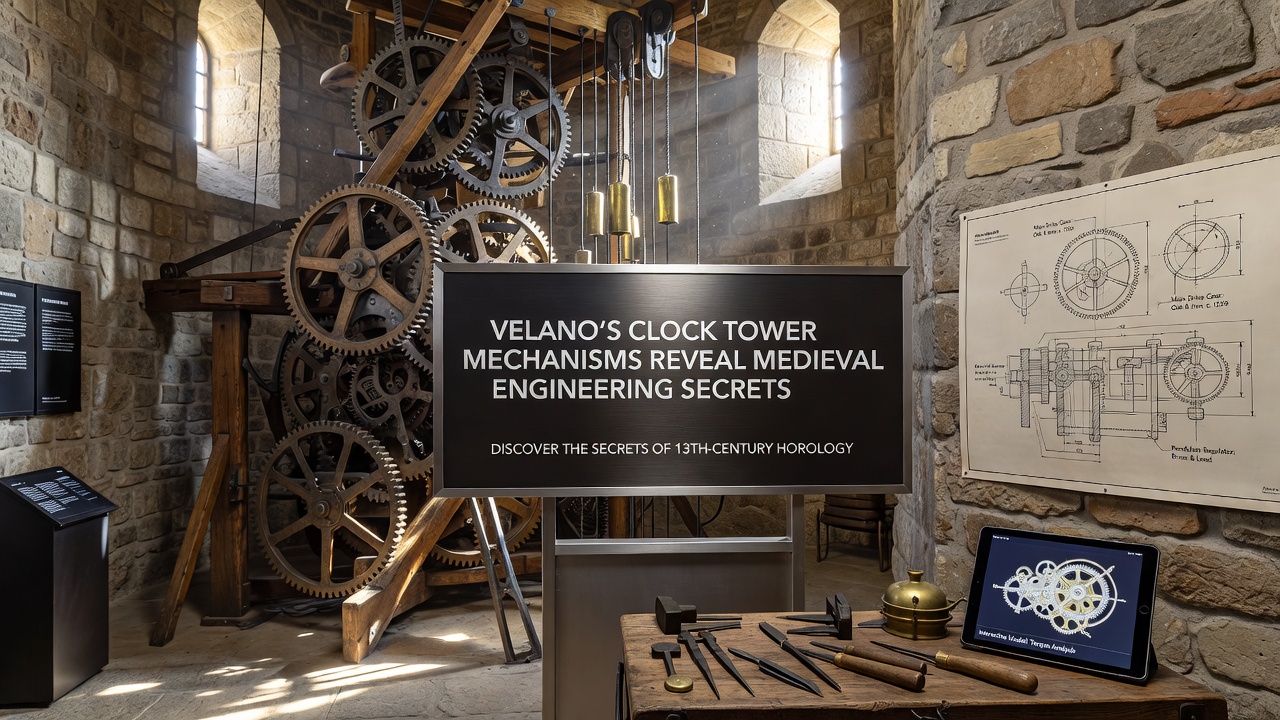
Across Europe the transition from water-driven timekeepers to weight-driven mechanical clocks accelerated after 1280, and Italian examples often incorporated local innovations in metallurgy and woodworking. Velano's tower reflects this period because its frame uses mortise-and-tenon joints reinforced with iron straps rather than the later bolted construction seen in 15th-century French and German clocks. Researchers at the European Commission's cultural heritage programs have catalogued similar joint techniques in structures ranging from Swiss belfries to Flemish town halls, showing regional variations that arose from available materials and skilled labor pools.
One documented parallel appears in the clock at the Cathedral of Cremona, where the striking sequence follows an identical pattern of quarter-hour chimes that Velano's mechanism also reproduces. Comparative analysis suggests that itinerant clockmakers carried template drawings between sites, allowing towns to commission functional instruments without developing entirely new designs. Such knowledge transfer explains why certain gear ratios appear repeatedly in towers separated by hundreds of kilometers yet built within the same decade.
Implications for Understanding Medieval Technology
The preservation of Velano's original components offers tangible evidence of how medieval engineers balanced durability against precision using only hand-forged parts and natural-fiber ropes. Measurements of the current escapement show that the foliot balance arm measures 1.2 meters in length and carries adjustable weights that allow regulation of swing period without disassembly. This simple yet effective method of rate adjustment remained in use until the introduction of the pendulum in the mid-1600s, after which many earlier towers underwent conversion.
Archival records from Velano's municipal archives list payments to clockkeepers through the 1500s, confirming that the mechanism operated as both timekeeper and civic signal device well into the Renaissance. These payments detail quantities of tallow for lubrication and quantities of iron stock for replacement pins, providing quantitative data that modern metallurgists use when assessing the original material properties.
Conclusion
Velano's clock tower continues to supply concrete data on medieval mechanical design through its surviving gears, weights, and frame construction. Documentation efforts leading into the October 2026 stabilization project will expand the available record while keeping alterations to the historic fabric minimal. The resulting information contributes to wider studies of how European communities adapted emerging technology to daily needs long before industrial manufacturing methods existed.